OPD Timings
- Farooq Hospital Lahore
Monday – Saturday
(9 am to 8 pm)
Sunday OFF
- Omi Hospital
Monday to Friday
(9 am to 8 pm)
Saturday
(9 am to 8 pm)
Sunday OFF
Contact Info
- Karachi: (021) 32258075 – 79
Lahore: (042) 111 000 043 - Whatsapp: 03312597322
- info@drimtiazahmad.com
For Consultation
Uterine fibroids & adenomyosis
Fibroid or leiomyoma is one of the most recurrent issue of the women reproductive system. Those seeking treatment for fibroids are often at the disposal of orthodox medical practices that pushes the patient into further misery. The world over, epidemiology of fibroids in women is not at par with its high prevalence. Similarly, often misdiagnosed as fibroid, adenomyosis accompanies severe, long-lasting “painful”symptoms and must be addressed, too. A simple pelvic ultrasound can diagnose uterine fibroid while an MRI is advised to rule out/diagnose adenomyosis.
Uterine fibroid can be classified by its location of growth or how it is attached to the uterus. The location, in turn, is in with reference to the three layers of the uterus. The different types of fibroids are:
- Intramural Fibroids: develops within the uterine wall
- Submucosal Fibroids: grow beneath the uterine lining/ inner layer
- Sub serosal Fibroids: grow outwardly from the uterus
- Pedunculated Fibroids: The location may be any, but the fibroid is attached to the uterus by a stalk or a peduncle
To date, a non-surgical, non-invasive, and patient-compliant approach towards removing symptomatic uterine fibroids and adenomyosis is through 3-D precision guided Uterine Fibroid Embolization (UFE). Older practices including hysterectomy and myomectomy translate into either a permanent inability to become a parent or a high chance of recurrence. Therefore, UFE is the safest fibroid treatment for unmarried/married women alike. The treatment is now available in Pakistan in two major cities: Karachi and Lahore since 2017.
UFE, also known as Uterine Artery Embolization (UAE), is being offered as a 3D precision guided endovascular treatment, Dr Imtiaz Ahmad is the pioneer of this technique and offered it for the first time in Pakistan in November 2017.It is a multistep procedure that majorly comprises uterine fibroid embolization. The procedure is safe with 95-97% success rate and provides an immediate recovery pathway to the patient. Uterine fibroid embolization aims at targeting the fibroids or adenomyosis with maximum accuracy, owing to live imaging, and is an interventional radiology technique.
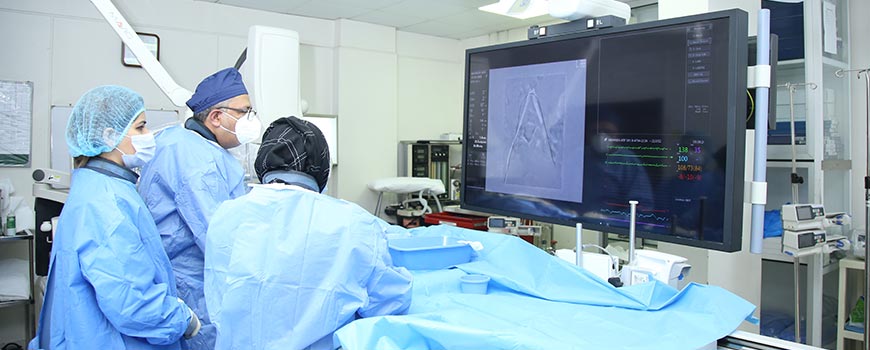
The procedure for Uterine fibroid embolization (UFE) begins with local anesthetic spray over the groin area or wrist.No surgical incision is given. Simple needle is needle is used to gain access to the arteries that feed the fibroids or adenomyosis. Using specialized X-ray equipment, the IR passes a catheter (small tube) via the incision up until the uterine artery, and guides it near the location of the fibroid or adenomyosis. The embolization procedure is carried out on these arteries using an FDA approved drug. Pain management and complete avoidance of post embolization syndrome are also key elements of this procedure. This increases the patient compliance and ensures a swift road towards recovery.
Post Procedures
Post treatment, Dr Imtiaz Ahmad and his team manage a thorough follow up with the patient for up to 6-12 months, especially in cases where restoring fertility had also been an aim. In the hospital, the medical staff is obligated to look after the health of the patient and ensure that they attain a speedy recovery. Most patients are discharged after only a few hours of the procedure, while some may be admitted overnight for further checkups. However, the recovery time is generally very short, especially after the fluoroscopic guided nerve block ensures that the patient is in comfort and pain free for 18-20 hours.
FAQ’s
Uterine Fibroids
What are uterine fibroids?
Uterine fibroids are non-cancerous growths that develop in the muscular wall of the uterus. They can vary in size, number, and location, and are most common in women of reproductive age. While some fibroids cause no symptoms, others may lead to heavy menstrual bleeding, pelvic pain or pressure, frequent urination, or complications with fertility. The exact cause of fibroids is not fully understood, but hormones, genetics, and growth factors play a role. Early evaluation and treatment can help manage symptoms and protect reproductive health.
What is uterine fibroid embolization (UFE)?
Uterine fibroid embolization, or UFE, is a minimally invasive treatment for symptomatic uterine fibroids and adenomyosis. The procedure blocks the blood vessels that supply the fibroids, causing them to shrink while preserving the uterus. UFE is performed using a small catheter inserted through the wrist or groin, guided by live imaging to target the fibroids precisely. The treatment does not require surgery, offers a fast recovery, and maintains fertility potential. Dr. Imtiaz Ahmad introduced 3D precision guided UFE in Pakistan, providing a safe and effective alternative to traditional surgery such as hysterectomy or myomectomy.
Can UFE preserve fertility?
Yes. Uterine fibroid embolization (UFE) is designed to treat fibroids while preserving the uterus, which helps maintain fertility potential. By precisely targeting the blood vessels that feed fibroids or adenomyosis, UFE shrinks the growths without removing the uterus or affecting healthy tissue. Many women who undergo UFE can still conceive naturally or with fertility treatments, making it a safe, non-surgical option for women who wish to preserve their reproductive future. Dr. Imtiaz Ahmad provides thorough follow-up care to monitor recovery and optimize fertility outcomes.
How long does a UFE take?
A uterine fibroid embolization (UFE) procedure typically takes about 30 to 60 minutes, depending on the number, size, and location of fibroids or adenomyosis. The procedure is performed under local anesthesia using a small catheter guided by live imaging, so no surgical incision is required. Most patients can go home the same day or after a short overnight stay. Dr. Imtiaz Ahmad ensures patient comfort throughout the procedure and provides post-treatment care for a smooth and quick recovery.
How many fibroids can be treated with UFE?
Uterine fibroid embolization (UFE) can treat multiple fibroids in a single session, regardless of their number or size. The procedure targets the arteries supplying the fibroids, effectively shrinking all treated fibroids simultaneously. Dr. Imtiaz Ahmad uses 3D precision imaging to ensure accurate embolization, making it possible to address large and multiple fibroids safely while preserving uterine function and fertility.
Can fibroids return after embolization?
Fibroids usually do not return after uterine fibroid embolization (UFE) when the procedure is done accurately. However, if patients skip follow-up checkups or do not monitor their uterine health, there is a small chance that new fibroids may develop over time. Regular post-procedure assessments with Dr. Imtiaz Ahmad help ensure long-term results and detect any new growth early, keeping your uterus healthy and reducing the risk of recurrence.
Hotline: 03311110397
wa.me/+923302963300 | wa.me/+923312597322
Dr. Imtiaz Ahmad
Adenomyosis
What is adenomyosis and how is it diagnosed?
Adenomyosis is a condition where the inner lining of the uterus grows into the muscular wall of the uterus, causing pain, heavy periods, and sometimes fertility issues. Diagnosis usually begins with a detailed medical history and pelvic examination. Imaging tests, such as ultrasound or MRI, are used to confirm the presence of adenomyosis and rule out other conditions like fibroids. Dr. Imtiaz Ahmad uses advanced 3D imaging during evaluation to accurately identify adenomyosis and plan targeted, minimally invasive treatments.
What is adenomyosis embolization?
Adenomyosis embolization is a minimally invasive procedure that treats adenomyosis by targeting the areas of abnormal tissue within the uterine wall. A tiny catheter is guided through the arteries supplying the affected tissue, and specialized embolic agents are used to block its blood flow. Over time, this causes the tissue to shrink, relieving symptoms such as heavy menstrual bleeding, pelvic pain, and pressure. This procedure preserves the uterus and fertility, avoids major surgery, and offers a faster recovery. Dr. Imtiaz Ahmad performs adenomyosis embolization using precise 3D imaging to ensure safety and effective results.
Is embolization better than hysterectomy for adenomyosis?
Embolization is often a safer and uterus-sparing alternative to hysterectomy for treating adenomyosis. While hysterectomy removes the uterus completely, embolization targets the abnormal tissue causing pain and heavy bleeding without major surgery. This allows women to preserve fertility, maintain hormonal balance, and recover faster. For many patients, embolization effectively relieves symptoms while keeping the uterus intact, making it the preferred choice for those who want long-term relief without losing this vital organ.
How long does recovery take after embolization for adenomyosis?
Recovery after embolization is typically much faster than after traditional surgery. Most patients can go home the same day or after an overnight stay for observation. Mild cramping or discomfort may last a few days, but most women resume normal daily activities within one week. Full recovery, including complete symptom relief and return to routine energy levels, usually occurs within 2 to 4 weeks. Because the procedure preserves the uterus and avoids major incisions, it offers a quicker, gentler recovery compared with hysterectomy or other invasive surgeries.

Dr. Ahmad has been practicing in the health care industry for more than 20 years.
In 1995 he completed his fellowship at Northwestern University Chicago Illinois USA.