OPD Timings
- Farooq Hospital Lahore
Monday – Saturday
(9 am to 8 pm)
Sunday OFF
- Omi Hospital
Monday to Friday
(9 am to 8 pm)
Saturday
(9 am to 8 pm)
Sunday OFF
Contact Info
- Karachi: (021) 32258075 – 79
Lahore: (042) 111 000 043 - Whatsapp: 03312597322
- info@drimtiazahmad.com
For Consultation
Gamma Block-Bariatric Embolization
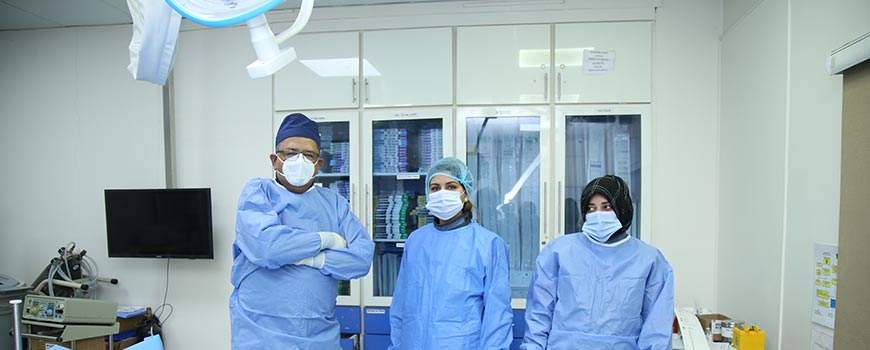
Obesity Bariatric Non-Surgical 3-D Guided Endovascular Treatment
The field of bariatric comprises therapies and strategies for weight reduction and management. A person with a Body Mass Index of greater than 30 kg/m2 is considered obese. Since obesity lies at the foundation of various diseases and affects all bodily systems, losing weight becomes a necessity in health management. The cause of obesity may be multifactorial. While in some cases, an unhealthy lifestyle seems to have played a role, in others, a disease could be the culprit.
Patients who do not respond to increased physical activity and diet plans are advised to go for surgical options to avoid worsening of their comorbidities. Obesity treatment relies heavily on bariatric surgery, which is an invasive procedure. As a result, nonsurgical weight loss procedures were a need of time. A modified version of the bariatric surgery thats aims to achieve the same goal, but in a safer way, is Bariatric arterial embolization- Gamma block procedure. Dr Imtiaz Ahmad is the pioneer of this modified procedure and was offered for the first time in Pakistan in November 2017.The procedure relies on the same principle as that of bariatric surgery, with variations in the approach taken.
Ghrelin is a hormone released from the fundus, which is a part of the stomach. Studies have shown Ghrelin to be associated with hunger management. If ghrelin could somehow be inhibited, the weight loss results from controlled diet and exercise would be manifolds obvious, that too, in a shorter time. While bariatric surgery achieves this by surgically removing the fundus and other parts of the digestive system, bariatric embolization blocks the left gastric artery, right gastric epipolic artery or short gastric arteries which supplies blood to the fundus, in turn, inhibiting the release of ghrelin hormone by 90%.
Gamma block-Bariatric embolization is performed under 3-dimensional live imaging to achieve accuracy and precision. The procedure begins by introducing micro catheters through either the radial or the femoral artery, which is then guided towards the left gastric artery. Embolization is performed under image guidance, which blocks the blood supply to the fundus. Consequently, ghrelin is inhibited, reducing the feeling of hunger in the patient. Altogether, Gamma block-bariatric embolization accelerates the process of weight loss through physical activity and diet plan. The patient will now feel motivated to put in efforts towards weight loss while saying goodbye to a stubborn reading on the weighing scale.
Gamma Block-Bariatric arterial embolization is a technique of interventional radiology and is therefore, a noninvasive procedure. Interventional radiologist and endovascular surgical specialist, Dr Imtiaz Ahmad, has specialized in the field and has become a pioneer in bringing these procedures to Pakistan, specifically in Karachi and Lahore.
Post Procedures
Once you’re done with the treatment, the doctors will analyze your road towards improvement at every step of the way. As you’re in the hospital, the doctor and medical staff are obligated to look after your health and ensure that you attain a speedy and pain free recovery. After being discharged from the hospital, your doctor and staff will keep in touch with you for regular check-ups through calls to ensure you’re doing well, until the point you get back to being perfectly healthy. A complete trust of the patient in our services and their satisfaction is our greatest motivation.
FAQ's
Weight Loss (Obesity Bariatric Non-Surgical 3-D Guided Endovascular Treatment)
What is non-surgical weight loss endovascular treatment?
Non-surgical weight loss endovascular treatment is a minimally invasive procedure that helps reduce hunger and support long-term weight loss without traditional bariatric surgery. Instead of removing or cutting any part of the stomach, the procedure gently blocks specific arteries that supply blood to the stomach’s fundus, the area responsible for releasing the hunger hormone ghrelin. When blood flow to this region decreases, ghrelin levels drop, appetite becomes easier to manage, and diet and exercise efforts start working more effectively.
How does this procedure help with weight reduction?
This procedure helps with weight reduction by lowering the release of ghrelin, the hormone that drives hunger, without altering the structure of the stomach. By reducing blood flow to the stomach’s fundus, appetite decreases naturally, making portion control easier and reducing constant food cravings. As a result, patients respond better to diet and physical activity, allowing weight loss to occur in a more sustainable and controlled way without the risks and long recovery associated with surgical bariatric procedures.
How much weight can I expect to lose?
Weight loss results vary from person to person and depend on starting weight, metabolism, and commitment to lifestyle changes. Most patients experience steady and noticeable weight reduction over the following months, especially when the procedure is combined with a structured diet and physical activity plan. Rather than extreme or rapid weight loss, the goal is sustainable progress, improved appetite control, and better long-term health outcomes.
Are there risks or complications?
As with any medical procedure, there are potential risks, but non-surgical endovascular weight loss treatment is considered safe when performed by an experienced specialist. Most patients experience only mild and temporary effects such as nausea, reduced appetite discomfort, or fatigue in the first few days. Serious complications are uncommon because the procedure does not involve cutting the stomach or altering digestion.
How long before results start to show?
Most patients begin to notice changes within the first few weeks after the procedure, mainly in the form of reduced hunger and earlier fullness during meals. Weight loss typically follows as appetite control improves and lifestyle changes become easier to maintain. Visible and measurable results continue to develop gradually over the next few months, supporting steady and sustainable weight reduction rather than sudden or extreme changes.
Dr. Ahmad has been practicing in the health care industry for more than 20 years.
In 1995 he completed his fellowship at Northwestern University Chicago Illinois USA.