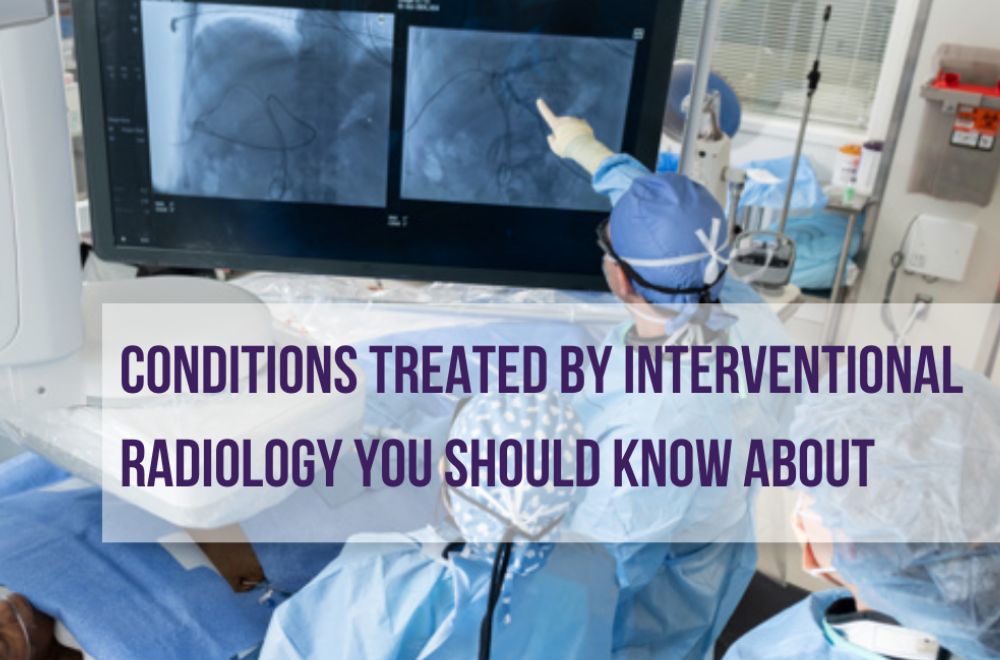
Interventional radiology is used to diagnose and treat a wide range of medical conditions with minimally invasive, image-guided procedures. The conditions treated by interventional radiology can affect the blood vessels, liver, kidneys, reproductive organs, and other areas of the body. Depending on the problem, treatment may involve opening a blocked vessel, controlling abnormal bleeding, treating a tumor, draining an infected fluid collection, or closing abnormal blood vessels. These procedures are planned according to the patient’s needs and use medical imaging to guide treatment with precision while avoiding the larger incisions required for many traditional surgical procedures.
What Does an Interventional Radiologist Do?
An interventional radiologist is a specialist trained to diagnose and treat medical conditions using image-guided, minimally invasive procedures. They use X-rays, ultrasound, CT scans, and other imaging techniques to see the treatment area and guide needles, catheters, wires, or other small instruments with precision.
Depending on the patient’s needs, they may treat blocked or abnormal blood vessels, control internal bleeding, manage tumors, drain fluid or infections, perform biopsies, or deliver treatment directly to a targeted area. These procedures generally require only a small opening in the skin, which can reduce tissue damage and may allow patients to recover sooner than with conventional open surgery. The specific technique and type of anesthesia depend on the procedure being performed.
What Conditions Are Treated by Interventional Radiology?
The conditions treated by interventional radiology can involve the blood vessels, reproductive organs, and other areas where minimally invasive, image-guided procedures are appropriate. Prof. Dr. Imtiaz Ahmad uses 3D precision-guided and catheter-based techniques to manage selected vascular and non-vascular problems without conventional open surgery.
His treatments include varicocele and venous leak, as well as uterine fibroids and adenomyosis, where embolization can be used as a uterus-preserving treatment. He also manages varicose and spider veins, pelvic congestion-related pain, enlarged prostate (BPH), and chronic bleeding hemorrhoids. For selected patients, he also performs bariatric embolization and other endovascular procedures for vascular disease, including peripheral artery disease, carotid disease, and aneurysms.
The appropriate approach depends on the diagnosis, vascular anatomy, imaging findings, and overall health. Dr. Imtiaz evaluates these factors before recommending whether an image-guided procedure is suitable.
How Are These Procedures Performed?
The procedure uses 3D precision-guided imaging and catheter-based techniques to reach the affected vessel through a small pinhole access rather than a large surgical incision. Real-time imaging allows the catheter to be guided directly to the target area, where the required treatment is performed with precision.
Most procedures are carried out under local anaesthesia, with mild sedation when needed, avoiding general anaesthesia in many cases. There is no large incision, extensive tissue dissection, or surgical wound. This can mean less pain, minimal or no visible scarring, shorter hospital stays, and faster recovery compared with many open surgical procedures.
Depending on the condition, patients may be able to return home the same day, with recovery often taking days rather than weeks. The exact recovery and anaesthesia requirements depend on the treatment and the patient’s individual needs.
What Does Experience With These Treatments Mean for Patients?
With more than 20 years of practice and hundreds of image-guided procedures performed, the focus is on careful patient selection, treatment precision, and safety. The practice reports 92% symptom improvement overall, with procedure-specific outcomes including:
- Uterine fibroid and adenomyosis embolization: 85–95% success
- Varicose and spider vein treatment: 90%+ success
- Varicocele embolization: often associated with improved sperm quality and symptom relief
For suitable patients, minimally invasive treatment can offer advantages over open surgery, including less tissue trauma, minimal scarring, shorter hospital stays, and faster recovery. These benefits can help patients return to normal activities sooner while avoiding the larger surgical wounds of conventional surgery.
Before treatment, medical history, relevant investigations, and individual suitability are assessed to support a safe and appropriate plan.
When Should You Consult a Specialist?
A specialist consultation can be helpful when you want to know whether your condition can be treated without conventional surgery. It allows your diagnosis, imaging, medical history, and available options to be assessed before a procedure is recommended.
Prof. Dr. Imtiaz Ahmad is Pakistan’s American triple board-certified Endovascular Surgeon and Interventional Radiologist, with over 25 years of clinical expertise across the USA and Pakistan. Fellowship-trained at Northwestern University in Chicago, he specializes in non-surgical, 3D precision-guided image treatments for vascular and selected non-vascular conditions.
His board certifications include Diagnostic Radiology, Vascular & Interventional Radiology, and Interventional Radiology & Diagnostic Radiology. He also serves as Director of Interventional Pain & Spine Interventions and Director of Bariatric Interventions at USA Vein Clinics, Fibroid, Vascular & Oncology Centers. His experience allows him to assess complex cases and select an individualized approach where minimally invasive intervention is appropriate.
If you would like to consult Dr. Imtiaz, contact us at
Hotline: 03311110397
wa.me/+923302963300
wa.me/+923312597322
Dr. Imtiaz Ahmad
Frequently Asked Questions
Q1: Is interventional radiology suitable for every patient?
A: No. Suitability depends on the specific diagnosis, severity, vascular anatomy, medical history, and previous treatments.
Q2: What tests may be needed before an interventional radiology procedure?
A: Depending on the diagnosis, evaluation may include blood tests, ultrasound, CT, MRI, Doppler studies, or angiographic imaging to confirm the diagnosis and guide planning.
Q3: Can interventional radiology be used when surgery is considered too risky?
A: In some cases, a minimally invasive approach may be considered for patients who have a higher risk with major surgery. The decision depends on the individual diagnosis and overall health.
Q4: Does interventional radiology treat chronic conditions or only emergencies?
A: It is used in both settings. Some procedures manage urgent problems such as bleeding, while others provide planned care for conditions such as vascular disorders, fibroids, and other chronic problems.