Minimally Invasive · Image Guided
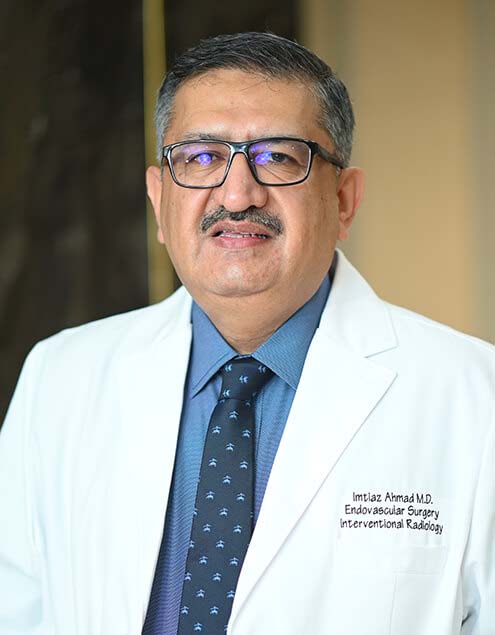
Endovascular surgery treats diseases of the arteries, veins, and circulatory system using catheter based vascular surgery rather than open repair wherever possible. As a vascular surgery specialist in Lahore and Karachi, Prof. Dr. Imtiaz Ahmad manages conditions ranging from peripheral artery disease to aneurysm treatment with minimally invasive vascular surgery.
20
+
Years in Practice
3
Major Vascular Disease Categories Treated
2
Cities Served (Lahore & Karachi)
DABR
Board Certified Specialist
No Surgery RequiredWalk-in, Walk-out Procedure
What Is Endovascular Surgery?
Treating Vascular Disease Without Open Surgery
Endovascular surgery is the vascular subspecialty that manages these conditions through medical therapy, catheter based procedures, and surgical reconstruction, with a minimally invasive endovascular approach preferred wherever it can safely achieve the same result as open surgery. This includes treatment for blocked arteries, varicose veins, and procedures aimed at preventing aneurysm rupture, stroke, or heart attack.
Minimally Invasive Where Possible
Endovascular procedures are performed through small punctures using catheters, avoiding the larger incisions of open vascular surgery.
A Multidisciplinary Approach
Treatment plans are coordinated with cardiology, internal medicine, neurology, and interventional radiology for complex cases.
Precision Through Imaging
Live imaging guides every endovascular procedure, ensuring accuracy in delicate vascular territory.
Conditions Treated
Vascular Diseases Managed With Endovascular Surgery
As a vascular surgery specialist, Dr. Imtiaz Ahmad evaluates and treats a wide range of circulatory conditions, from common to rare, using endovascular procedures wherever appropriate.
Abdominal aortic aneurysm
Carotid artery disease and stroke risk
Peripheral artery disease in the legs
Blocked or narrowed arteries (atherosclerosis)
Varicose and spider veins
Varicocele related vascular disease
Iliac, femoral, and tibial artery disease
Circulatory conditions linked to diabetes or smoking
Important: Whether a minimally invasive endovascular approach or conventional vascular surgery is more suitable depends on the specific condition, its location, and the patient’s overall health. A vascular evaluation helps determine the right course of action.
How We Evaluate Vascular Disease

Clinical Consultation
A review of symptoms, risk factors, and medical history.
A review of symptoms, risk factors, and medical history.

Vascular Imaging
Ultrasound, CT, or angiography to assess the affected arteries or veins.

Severity Assessment
Determining the extent of blockage, aneurysm size, or disease progression.

Multidisciplinary Review
Coordinating with cardiology or neurology where the case requires it.

Treatment Planning
Deciding between endovascular and conventional surgical approaches.
The Procedure
How Endovascular Procedures Work
Endovascular procedures are performed under live imaging, allowing precise navigation through the vascular system.
Local Anaesthesia & Access
A small puncture is made in an artery, typically in the groin or wrist. General anaesthesia is often avoidable.
1
0
Catheter Navigation
A catheter is guided through blood vessels to the affected artery or vein under live imaging guidance.
2
0
Targeted Embolization
Depending on the condition, this may involve placing a stent, performing endovascular aneurysm repair, or clearing a blockage.
3
0
Same-Day Recovery
Most patients are briefly monitored before discharge, with follow-up to track vascular health.
4
Endovascular Surgery vs Open Vascular Surgery
FACTOR
Type of Procedure
Anaesthesia
Incision
Hospital Stay
Recovery Time
Suitable for High-Risk Patients
Image Guidance
Endovascular Surgery (Dr. Imtiaz)
Open Vascular Surgery
Why Choose Us
A Leading Endovascular Surgeon in Pakistan
Endovascular procedures demand precision in delicate vascular territory. Prof. Dr. Imtiaz Ahmad brings decades of endovascular and interventional radiology expertise to patients in Lahore and Karachi.
Northwestern Fellowship
Fellowship trained at Northwestern University, Chicago, in 1995, with over two decades in endovascular and interventional practice.
Advanced 3D Imaging
Combines skills as both an interventional radiologist and endovascular surgical specialist, offering both surgical and non-surgical treatment options.
A Technique Across Conditions
Works alongside cardiology, internal medicine, neurology, and interventional radiology for complex vascular cases.
Trusted Across Pakistan
Patients travel from across the country for vascular intervention and endovascular surgery.
Patient Stories
What Patients Say
Men who were hesitant about surgery have found a more comfortable path to relief through PAE.
”The overall hospital experience was excellent, with staff providing care and guidance in the best possible way. From the start of treatment to recovery, everything was managed smoothly and with attention. I am very satisfied and grateful for the support received.
Yousuf B., 58Lahore, Pakistan
”Overall experience was very good. Dr. Imtiaz and his staff were excellent, kind, and cooperative throughout the treatment. The environment was comfortable, and I felt completely satisfied with the care provided. I truly appreciate their efforts and dedication.
Naseem A., 64Karachi, Pakistan
”I am very satisfied with Dr. Imtiaz and his staff. Their care, professionalism, and supportive behavior made the experience excellent. I am truly thankful to Dr. Imtiaz and the entire team for their kindness and outstanding service.
Rafiq H., 61Lahore, Pakistan
Desclaimer: The testimonials featured on this page reflect the genuine experiences of patients personally treated by Prof. Dr. Imtiaz Ahmad. Each story is shared with the patient’s informed consent and has not been edited to misrepresent their outcome.
FAQ
Common Questions About Endovascular Surgery
Have more questions about endovascular surgery? Get in touch for a free consultation before deciding on treatment.
Speak directly with Dr. Imtiaz’s team
0331 111 0397
Available Mon–Sat, 9am–6pm
What are the benefits of endovascular surgery?
Endovascular surgery offers smaller incisions, less pain, lower risk of complications, and significantly faster recovery compared to open vascular surgery. Because procedures are guided by live imaging, treatment can be highly precise, and many patients are able to return home the same day.
What is the minimally invasive treatment for vascular disease?
Minimally invasive vascular treatment uses catheter based procedures, guided by imaging, to treat conditions such as aneurysms, blocked arteries, and peripheral artery disease through a small puncture rather than an open incision. This includes treatments such as endovascular aneurysm repair and angioplasty with stenting.
How does endovascular treatment compare to open surgery?
Endovascular treatment generally involves less pain, a shorter hospital stay, and a faster return to normal activity compared to open surgery, since it avoids large incisions and relies on catheter based access instead. Open surgery may still be necessary for certain complex cases, which is why a vascular evaluation is important to determine the most suitable approach.
Related Treatments
Other Minimally Invasive Treatments
Free First Consultation
Considering Treatment Without Surgery?
Book a free consultation with Prof. Dr. Imtiaz Ahmad, a US board-certified specialist in Pakistan, available in Lahore, Karachi, and online from anywhere in the world. We are happy to help you understand your options clearly and without pressure.
Lahore
Farooq Hospital, DHA, 0331 111 0397
Worldwide
info@drimtiazahmad.com
Karachi
OMI Hospital, MA Jinnah Rd, 0331 111 0397