
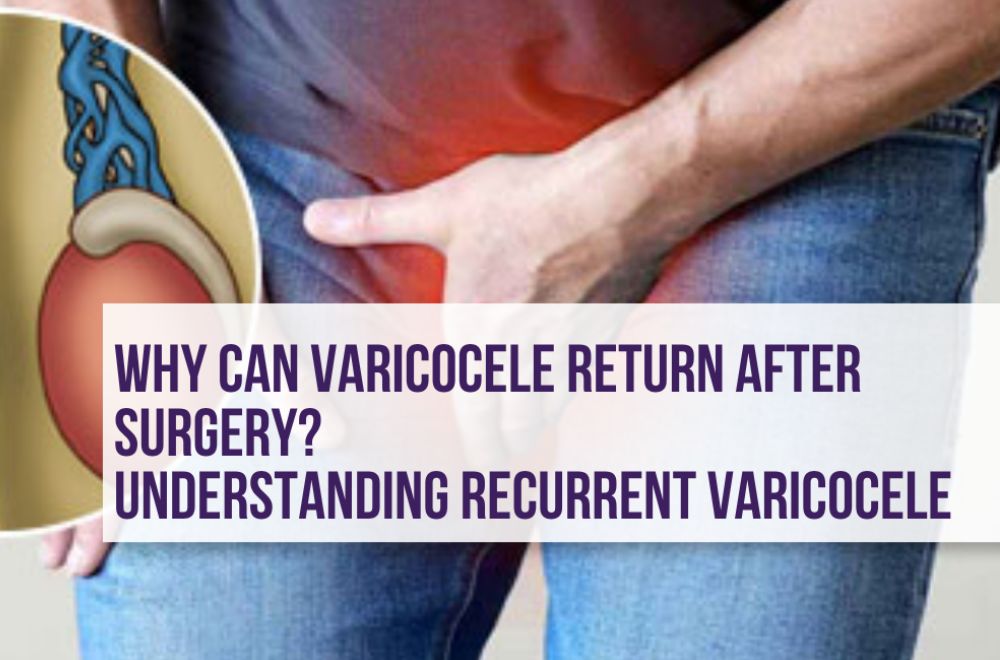
Varicocele surgery is intended to correct enlarged veins in the scrotum, but the condition can sometimes return months or even years later. For some men, discomfort, swelling, or fertility concerns may persist or reappear after treatment. Recurrent varicocele after surgery can raise questions about why the original procedure did not provide a lasting result, whether fertility may be affected again, and if further treatment is necessary.
Recurrence can happen for several reasons, including untreated veins or changes in blood flow through nearby vessels. Recognising the signs and understanding the available treatment options can help patients decide what to do next. In some cases, non-surgical treatments such as varicocele embolization may offer an alternative to undergoing surgery again.
Why Can Varicocele Return After Surgery?
A recurrent varicocele can develop when some affected veins remain untreated or blood finds alternative routes through nearby vessels. Recurrence does not necessarily mean the original surgery was performed incorrectly, as the complex network of veins around the testicles can make some vessels difficult to identify.
Common reasons include:
- Missed feeding veins: Small or duplicated veins may remain untreated, allowing blood to pool again.
- Collateral circulation: Blood may reroute through nearby veins, causing the condition to persist or return.
- Anatomical variations: Differences in vein structure and drainage can make complete treatment more challenging.
- Incomplete vein ligation: If the affected veins are not fully closed, abnormal blood flow may continue.
- Enlargement of collateral veins: Alternative veins may enlarge over time and contribute to recurrence.
What Is the Recurrence Rate of Varicocele Surgery?
The recurrence rate after varicocele surgery ranges from approximately 0% to 35%, depending on the technique used. Microsurgical varicocelectomy generally has the lowest recurrence rate, around 0–3.57%, while laparoscopic surgery has reported rates of 2.17–7.14%. Conventional open and retroperitoneal procedures tend to have higher recurrence rates, reaching up to 37% in some studies.
What Are the Signs and Symptoms of Recurrent Varicocele?
The signs of recurrence can be similar to those experienced before treatment. Some men notice symptoms returning within months, while others may not notice changes for years. Common signs include:
- A dull ache or heaviness in the scrotum, especially after standing for long periods.
- Swelling or enlarged, twisted veins around the testicle.
- Discomfort that worsens with physical activity and improves when lying down.
- Persistent or recurring fertility concerns.
Some men have no noticeable symptoms, so the condition may only be identified during a follow-up examination or fertility assessment. A clinical examination and Doppler ultrasound can help confirm whether it has returned.
Can Recurrent Varicocele Affect Sperm Quality and Fertility?
Yes, a recurrent varicocele can affect sperm quality by increasing the temperature around the testicles and disrupting normal sperm production. This may lower sperm count, reduce motility, and increase the proportion of abnormally shaped sperm, making conception more difficult.
Men who experienced improvements in semen quality after treatment may notice these changes again if the condition returns. A semen analysis can identify changes in sperm count, motility, and shape, particularly in men trying to conceive.
What Non-Surgical Treatments Are Available for Recurrent Varicocele?
3D precision-guided embolization is a non-surgical option for men whose condition returns after surgery. The procedure uses real-time imaging to map the affected veins and guide a thin catheter through the blood vessels to the site of abnormal blood flow. Small coils or a medical embolic agent are then placed to close the faulty veins, allowing blood to drain through healthier pathways.
Unlike repeat surgery, embolization requires only a small puncture in the groin or neck, without a surgical incision or general anaesthesia. The procedure takes less than an hour, and most patients return home the same day, resuming normal activities within 24–48 hours.
One advantage of this approach is that the veins can be examined from inside the blood vessels, helping identify alternative or previously missed vessels that may contribute to recurrence. It also avoids the tissue dissection required during repeat surgery and leaves no surgical scar at the treatment site.
Embolization has reported technical success rates generally above 90%. For suitable patients, it can relieve scrotal discomfort and may improve sperm quality by addressing abnormal blood flow. Its minimally invasive approach makes it an alternative to consider when the condition returns after surgery.
When Should You Consult a Varicocele Specialist for Recurrent Varicocele?
If scrotal discomfort, swelling, or fertility concerns return after surgery, consulting a specialist can help you explore further treatment options. Prof. Dr. Imtiaz Ahmad is a US triple board-certified interventional radiologist with over 25 years of clinical experience and fellowship training at Northwestern University, Chicago, in 1995. He specialises in 3D precision-guided embolization, using advanced imaging and catheter-based techniques to treat affected veins. He offers this minimally invasive alternative to repeat surgery for suitable patients in Pakistan.
If you would like to consult Dr. Imtiaz, contact us at
Hotline: 03311110397
wa.me/+923302963300
wa.me/+923312597322
Dr. Imtiaz Ahmad
Frequently Asked Questions
Q1: How soon can a varicocele return after surgery?
A: Recurrence may become noticeable within months or develop years after surgery. The timing depends on the underlying cause and whether abnormal blood flow persists.
Q2: How can I tell if my varicocele has returned?
A: You may notice the same scrotal heaviness, dull ache, or enlarged veins you experienced before surgery. Some men have no noticeable symptoms and discover the recurrence during a follow-up examination or fertility assessment.
Q3: Will I need surgery again if my varicocele returns?
A: Not necessarily. Varicocele embolization may offer a non-surgical alternative. It uses a thin catheter to close the affected veins without another surgical incision.
Q4: How long does recovery take after varicocele embolization?
A: Most patients return home the same day and resume normal activities within 24–48 hours.


