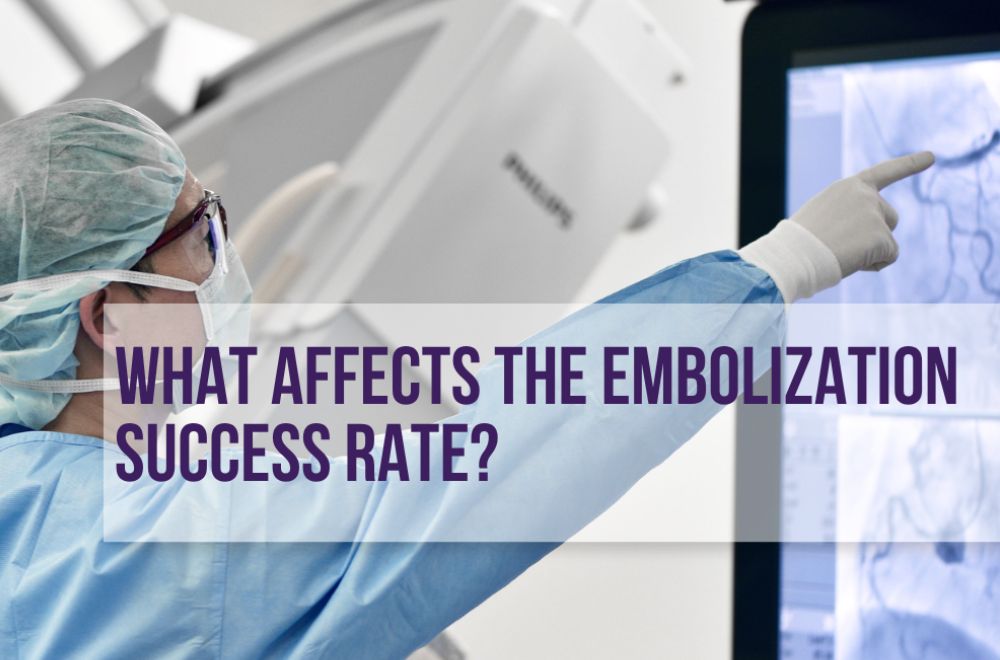
Embolization is used to treat many different conditions by blocking the blood vessels supplying the problem area. How well the treatment works can vary from patient to patient. The embolization success rate depends on factors such as the condition being treated, its blood supply, the patient’s anatomy, and how precisely the vessels can be targeted.
Before treatment, detailed imaging helps the specialist understand the blood vessels involved and plan the procedure. The choice of embolic material and technique also plays a role in the outcome. The number and location of the vessels being treated can also affect the results. For patients, this means that the expected outcome can differ depending on their individual condition and anatomy.
Follow-up helps assess how well the treatment has worked and whether any further care is needed.
How Does It Compare With Open Surgery?
Embolization can provide effective treatment without the large incision required for open surgery. A thin catheter is guided through the blood vessels to the target area, allowing the abnormal or feeding vessels to be treated directly.
For conditions such as uterine fibroids and varicocele, this approach has shown high rates of clinical improvement while avoiding the tissue disruption associated with open procedures. It can also preserve the surrounding anatomy, with many treatments performed without stitches or a large surgical wound.
Compared with open surgery, the procedure can reduce blood loss, avoid a large incision, and limit damage to surrounding tissues. It also allows treatment to be delivered selectively through the blood supply rather than removing the affected organ or tissue. For suitable patients, these advantages can mean less postoperative discomfort, a shorter hospital stay, and an earlier return to normal activities. However, results vary depending on the condition, anatomy, and individual patient.
How Does UFE Treat Uterine Fibroids?
Uterine Fibroid Embolization (UFE), also called Uterine Artery Embolization, treats fibroids by reducing their blood supply so they gradually shrink. A thin catheter is used to deliver embolic particles into the uterine arteries without removing the uterus. This allows the fibroids to be treated while preserving the uterus.
UFE is a uterus-preserving alternative to hysterectomy and avoids the major incision associated with myomectomy. The 3D precision-guided technique allows the blood supply to individual fibroids to be targeted accurately. The procedure usually takes less than an hour and is performed under local anesthesia with light sedation, followed by same-day or overnight observation.
What Is the UFE Success Rate?
The UFE success rate is generally high for controlling fibroid-related symptoms. Based on the treatment information provided, 85–90% of patients experience significant symptom improvement, with other figures reporting symptom relief in approximately 85–95% of patients. Fibroid volume may also decrease by around 40–60% over the months following treatment.
These results are assessed over time as the fibroids shrink. Heavy menstrual bleeding, pelvic pressure, and pain may gradually improve, while follow-up imaging can help assess the reduction in fibroid size and overall response.
Results can vary depending on the number, size, and location of the fibroids, as well as the patient’s individual anatomy and health.
What Are the Outcomes of Varicocele Embolization?
Varicocele embolization can relieve scrotal pain, swelling, and discomfort while treating the abnormal veins responsible for the varicocele. A 92% symptom improvement rate has been reported with this approach.
Compared with open varicocele surgery, the procedure avoids a surgical incision and preserves the testicular structures. It can also treat veins that may be difficult to reach surgically, with less tissue disruption and a shorter recovery. Most patients can return to normal activities relatively quickly, depending on their individual recovery.
For men with fertility concerns, sperm count, motility, and morphology may improve over 3–6 months following successful treatment. Follow-up semen analysis can help assess these changes over time. These outcomes make this a non-surgical option for selected patients with varicocele.
Why Does the Right Specialist Matter for Embolization?
Prof. Dr. Imtiaz Ahmad uses a unique 3D Precision Guided Embolization approach that combines advanced imaging, detailed vascular mapping, and precise catheter-based treatment. His technique is designed to identify the exact vessels responsible for the condition and target them selectively, rather than using the same approach for every patient.
As Pakistan’s American Triple Board Certified Endovascular Surgeon & Interventional Radiologist with over 25 years of experience, he brings specialized expertise to complex vascular procedures. His approach incorporates state-of-the-art imaging and procedure planning to improve precision while minimizing unnecessary treatment of surrounding healthy tissue.
This advanced, individualized approach is used across treatments including UFE and varicocele embolization, where strong clinical outcomes and high symptom improvement rates have been reported. Treatment is planned according to each patient’s vascular anatomy and condition, allowing the target vessels to be addressed as precisely as possible.
If you would like to consult Dr. Imtiaz, contact us at
Hotline: 03311110397
wa.me/+923302963300
wa.me/+923312597322
Dr. Imtiaz Ahmad
Frequently Asked Questions
Q1: How do doctors know whether embolization has worked?
A: Improvement in symptoms is one measure. Depending on the condition, follow-up imaging, Doppler ultrasound, or semen analysis may also be used to assess the response.
Q2: Can embolization affect future treatment options?
A: In many cases, other treatments remain possible if needed. This depends on the condition treated and the type of embolization performed.
Q3: Why can symptoms take time to improve after embolization?
A: Embolization stops the abnormal blood supply, but the treated tissue does not disappear immediately. For example, fibroids gradually shrink after their blood supply is reduced.
Q4: Is embolization suitable for patients who have already had surgery?
A: It can be. Previous surgery does not automatically rule out embolization, but imaging is needed to determine whether there is a treatable vascular target.