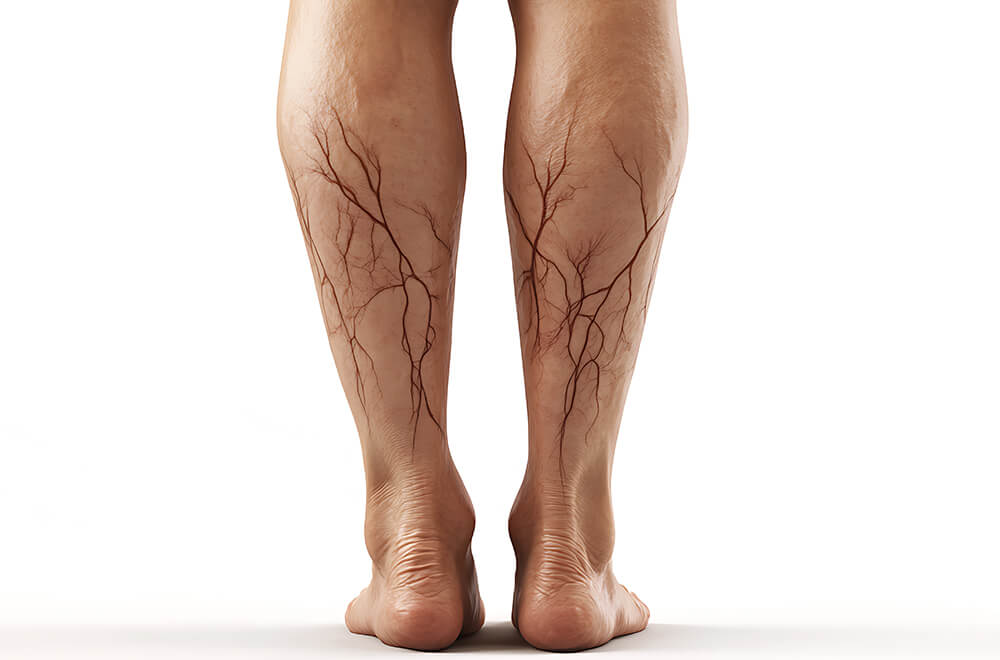
How to Treat Varicose Veins Naturally and Medically – Expert Guide
Many people grow concerned when they notice visible blue veins on legs, especially when heaviness, swelling, or night discomfort follows. These veins may look harmless at first glance, yet they often signal underlying changes in venous pressure. Patients frequently report tightness in the calves, aching after prolonged standing, and a crawling sensation when lying down to rest. Such symptoms warrant careful evaluation because healthy vessels do not suddenly enlarge without cause.
Understanding How Leg Veins Function
Leg veins carry blood upward toward the heart against gravity. Strong one way valves inside the veins keep blood moving in the correct direction. When those valves weaken, blood flows backward and collects in the lower limbs. That pooling stretches the vein walls and gradually leads to visible blue veins on legs. Over time, pressure continues to rise, and symptoms intensify if the root cause is not addressed.
A common concern patients raise involves why veins appear blue. Blood inside the veins remains dark red, not blue. However, light penetrates the skin and reflects wavelengths that create a blue appearance. The color itself does not indicate danger, but enlargement and associated symptoms require attention.
What Are Varicose Veins and Why Do They Develop
Varicose veins are enlarged and twisted vessels that form when valve dysfunction allows blood to pool in the legs. Increased pressure stretches the vein walls and makes them more prominent under the skin.
Genetics, prolonged standing, obesity, pregnancy, aging, and heavy physical strain all increase the risk of venous valve weakness. Activities such as weightlifting, wrestling, kickboxing, or other high impact sports can worsen a mild pre existing condition. As pressure builds, vessels enlarge and become more visible. Eventually, many individuals notice visible blue veins on legs along with aching or swelling near the ankles.
Blue Veins Meaning and When to Take Them Seriously
Small superficial vessels may cause no symptoms and remain stable for years. However, blue veins meaning changes when discomfort, swelling, skin discoloration, or night cramps appear. These signs often indicate chronic venous insufficiency.
When untreated, elevated venous pressure may darken the skin around the ankles and cause itching or thickening. Advanced cases can lead to ulcers. Early evaluation prevents these complications and preserves mobility. Therefore, persistent visible blue veins on legs should prompt medical consultation rather than delay.
Treatment and Quality of Life Improvement
Patients frequently ask whether treatment will improve sleep, swelling, and restlessness. If venous insufficiency drives these symptoms, treatment often produces remarkable improvement. Swelling reduces. Leg heaviness decreases. Night restlessness improves. Sleep becomes more stable.
Modern medicine now offers advanced minimally invasive procedures that do not require open surgery or general anesthesia. These treatments focus on closing faulty veins so blood naturally reroutes through healthier channels.
Minimally Invasive and Non Surgical Treatments
Dr. Imtiaz Ahmad focuses primarily on modern endovascular techniques that allow faster recovery and minimal downtime.
1. Mechanochemical Endovenous Ablation, also known as Clarivein
A specialized catheter rotates inside the diseased vein while simultaneously delivering a sclerosant solution. This combined mechanical and chemical action causes the vein to collapse and seal. The procedure typically takes 15 to 20 minutes.
2. VenaSeal System
This method uses an FDA approved medical adhesive delivered through a catheter to seal the faulty vein. The procedure requires local anesthesia, and many patients do not need compression stockings afterward. Blood flow reroutes naturally to healthy veins.
3. Sclerotherapy
A sclerosing solution is injected directly into smaller varicose or spider veins. The solution irritates the vein lining, causing it to scar and close. The body gradually absorbs the treated vein while circulation continues through normal vessels.
4. Endovenous Laser Therapy
A laser fiber is guided into the vein under ultrasound guidance. Controlled heat seals the vein shut. The procedure occurs under local anesthesia and works effectively for medium to larger varicose veins.
5. Radiofrequency Ablation
A thin catheter delivers radiofrequency energy to heat and collapse the vein wall. This outpatient procedure also uses local anesthesia and allows immediate walking afterward.
What This Means for Patients
These procedures avoid traditional open surgery and general anesthesia. Most patients walk immediately after treatment and return home the same day. Hospital stays are rarely required. By closing off faulty veins, these treatments reduce pain, swelling, heaviness, and discomfort. Many patients report noticeable improvement in mobility and daily comfort within weeks.
In many cases, one or two sessions resolve the primary venous issue. When reflux stops, pressure decreases and symptoms gradually settle. Importantly, treatment does not only improve cosmetic appearance. It restores healthier circulation and improves overall quality of life.
How the Best Procedure Is Selected
The choice of procedure depends on several factors. These include the size and location of the varicose veins, severity of symptoms, impact on daily activities, and detailed venous ultrasound findings. Ultrasound mapping allows precise identification of refluxing veins before treatment.
A qualified vein specialist evaluates each case individually and recommends the most suitable option, whether that involves sclerotherapy for smaller veins or endovenous ablation for larger refluxing vessels.
A Message to Patients and Healthcare Providers
Too many people rely solely on internet searches instead of structured medical evaluation. Online information cannot replace duplex ultrasound imaging. A vascular specialist must properly examine the legs and assess blood flow before recommending treatment.
Healthcare providers should also remain attentive. When a patient presents with chronic leg heaviness, swelling, or restlessness, clinicians should examine the ankles carefully. Visible blue veins on legs may provide an important diagnostic clue. Addressing the vascular cause can prevent unnecessary long term medication in selected cases.
Get Treatment Today
Patients who notice visible blue veins on legs should seek expert evaluation to confirm that the condition does not indicate a serious or progressive circulatory disorder. Accurate diagnosis through clinical examination and duplex ultrasound protects long term health. Dr. Imtiaz is an Endovascular Surgical Specialist and Interventional Radiologist with more than 25 years of experience and holds a United States license in Interventional Radiology. Anyone who wishes to receive a comprehensive check up may contact the clinic at the given numbers below to schedule a professional assessment.
Contact for Consultation
Hotline: 03311110397
wa.me/+923302963300
wa.me/+923312597322
Dr. Imtiaz Ahmad
Frequently Asked Questions
Q: What are varicose veins in simple terms?
A: Weak valves allow blood to pool in the legs, increasing pressure and enlarging the vessels.
Q: What are varicose veins in simple terms?
A: Weak valves allow blood to pool in the legs, increasing pressure and enlarging the vessels.
Q: Can treatment improve sleep and leg restlessness?
A: If venous congestion contributes to restlessness, correcting reflux can reduce nighttime discomfort and improve sleep quality.
Prof. Dr. Imtiaz Ahmad
Endovascular Surgical Specialist and Interventional Radiologist
Prof. Dr. Imtiaz Ahmad completed his Fellowship at Northwestern University, Chicago in 1995 and has over 25 years of practice across 25+ teaching and community hospitals in New York, New Jersey, and Connecticut. He is triple board-certified by the American Board of Radiology (DABR, DABR-VIR, DABR-IR/DR) and currently serves patients at Farooq Hospital in Lahore and OMI Hospital in Karachi, with online consultations available worldwide.
Still Have Questions?
Speak directly with our team — we’re happy to guide you.
0331 111 0397
24/7 Hotline · Lahore & Karachi