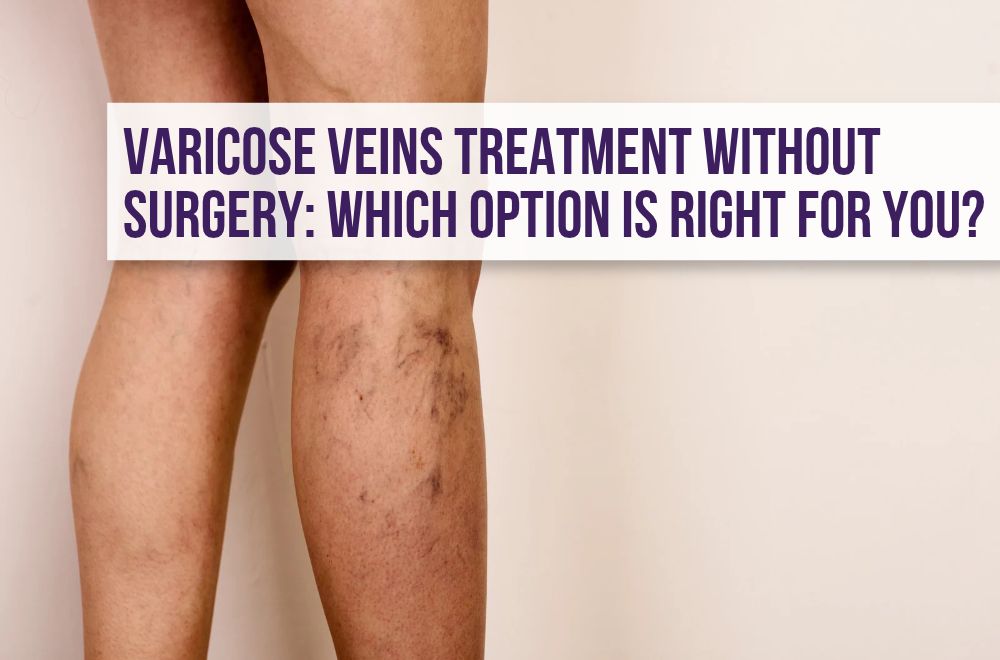
Visible veins in the legs can indicate an underlying problem with blood circulation. Beyond their appearance, they may cause aching, heaviness, swelling, and discomfort, particularly after prolonged standing or sitting. Today, varicose vein treatments include several minimally invasive alternatives to traditional vein-stripping surgery. These procedures can close affected veins through small catheter-based techniques without major incisions or general anaesthesia. However, the right approach depends on the size and location of the affected veins, the extent of venous reflux, and the findings of a duplex ultrasound.
What Are the Options for Treating Varicose Veins?
Varicose veins develop when weakened or damaged valves allow blood to flow backwards and pool inside the veins. Treatment focuses on relieving symptoms, improving blood flow, and preventing complications such as skin changes and venous ulcers. The available options include:
- Conservative Management: Regular walking, elevating the legs, avoiding prolonged standing or sitting, and wearing compression stockings can help ease swelling and discomfort.
- Medical Management: Certain medications may help relieve symptoms such as leg heaviness and swelling, but they cannot repair damaged vein valves.
- Surgical Treatment: Traditional procedures, including vein stripping and ligation, involve removing or tying off the affected veins.
- Non-Surgical Treatment: Minimally invasive procedures seal faulty veins using medical adhesives, injected solutions, mechanical techniques, laser energy, or radiofrequency heat. These methods avoid traditional open surgery and generally involve a shorter recovery.
Non-surgical varicose veins treatment offers an alternative to conventional surgery. These procedures close the affected veins and redirect blood flow through healthier vessels. The choice of technique depends on the ultrasound findings, vein size and location, and the extent of venous reflux.
How Do Different Varicose Vein Treatments Compare?
The available procedures differ mainly in how they close the affected veins. Some use medical adhesives or injected solutions, while others rely on mechanical action or heat. Their suitability also depends on the size and location of the treated vein.
- VenaSeal: Uses a medical-grade adhesive delivered through a thin catheter to seal the affected vein. It does not involve heat and generally eliminates the need for compression stockings after treatment.
- Mechanochemical Ablation (Clarivein): Combines mechanical disruption of the vein’s inner lining with a liquid sclerosant to close the vessel without using thermal energy.
- Sclerotherapy: Involves injecting a liquid or foam solution directly into smaller veins, reticular veins, or spider veins to close them.
- Endovenous Laser Ablation (EVLA): Uses laser energy delivered through a thin fibre to heat and close larger veins, particularly the saphenous veins.
- Radiofrequency Ablation (RFA): Uses controlled heat delivered through a catheter to seal the affected vein from within.
Each technique has different requirements for anaesthesia, compression stockings, and recovery. VenaSeal avoids heat, while laser and radiofrequency procedures rely on thermal energy. Sclerotherapy is generally more suitable for smaller vessels rather than the main veins responsible for venous reflux.
How Does Endovenous Laser Ablation Work?
Endovenous laser ablation (EVLA) is a minimally invasive procedure used to close larger affected veins, particularly when the main superficial veins have faulty valves. Unlike traditional vein-stripping surgery, which removes the affected veins through incisions, EVLA seals them from within using controlled laser energy. Blood is then redirected through healthier veins.
During the procedure, a thin laser fibre is inserted into the targeted vein through a small skin puncture. Guided by ultrasound, the fibre delivers heat to the vein wall, causing it to collapse and seal shut. The procedure is performed under local anaesthesia, sometimes with light sedation, and patients can usually return home the same day.
Compared with conventional surgery, EVLA requires smaller entry points and generally results in less discomfort, minimal scarring, and a shorter recovery period. Most patients can resume light activities within a few days. Temporary bruising, tenderness, or swelling may occur but usually subsides as the area heals.
Although endovenous laser ablation has good treatment outcomes, the use of thermal energy carries a small risk of nerve irritation. Its suitability depends on the vein’s anatomy and duplex ultrasound findings.
What Should You Expect During Recovery After Vein Treatment?
Recovery after minimally invasive vein procedures is generally faster than after traditional surgery. Most are performed on an outpatient basis, so patients can go home the same day and return to light activities within a day or two.
Some bruising, tenderness, or swelling around the treated area is normal and usually settles gradually. Walking is encouraged during recovery, while strenuous exercise may need to be postponed temporarily. The need for compression stockings depends on the procedure performed.
Consult a Varicose Vein Specialist
Prof. Dr. Imtiaz Ahmad is a triple board-certified American Interventional Radiologist and Endovascular Surgical Specialist with over 25 years of experience. He specialises in advanced, minimally invasive varicose vein treatments, including non-thermal techniques such as VenaSeal and sclerotherapy, offering alternatives to traditional vein surgery. Patients can consult him for an individualised assessment and treatment plan based on their vein condition.
If you would like to consult Dr. Imtiaz, contact us at:
Hotline: 03311110397
WhatsApp: wa.me/+923302963300
WhatsApp: wa.me/+923312597322
Dr. Imtiaz Ahmad
Frequently Asked Questions
Q1: Can treated veins become enlarged again?
A: The treated veins generally remain closed, but new affected veins can develop over time due to ongoing venous insufficiency.
Q2: Can non-thermal treatment be used for recurring vein problems?
A: In selected cases, yes. A duplex ultrasound helps identify the source of recurrent venous reflux and determine the most appropriate approach.
Q3: Will treatment improve blood circulation in my legs?
A: Closing faulty veins redirects blood through healthier vessels, helping reduce blood pooling and symptoms such as heaviness and swelling.