Non Surgical · Walk In Walk Out Procedure
Plantar Fasciitis Embolization is an advanced, 3D precision-guided, non-surgical heel pain treatment for chronic plantar fasciitis that has not responded to physiotherapy or injections. Using 3D image guided embolization, it blocks the abnormal blood vessels driving the inflammation, without cutting the ligament or removing any tissue.
25
+
Years of Clinical Experience
1995
Northwestern Fellowship
1
Day Procedure for Most Patients
2
Cities Served (Lahore & Karachi)
No Surgery RequiredWalk-in, Walk-out Procedure
What Is Plantar Fasciitis Embolization?
Treating Chronic Heel Pain at Its Root Cause
The plantar fascia connects the heel bone to the toes and supports the foot’s arch. Under repeated stress, it develops micro-tears and inflammation that the body struggles to resolve, eventually forming abnormal blood vessels that keep pain signals active long after the initial injury.
Plantar Fasciitis Embolization blocks those abnormal vessels under imaging guidance, cutting off the source of inflammation without touching the ligament itself.
Targets the Inflammation
PFE blocks the abnormal vessels feeding the inflammatory process, addressing the underlying cause rather than masking the pain.
Ligament Left Fully Intact
Unlike surgical fascia release, embolization preserves the plantar fascia, avoiding the structural instability that can follow cutting procedures.
Walk In, Walk Out Recovery
Most patients are discharged the same day and walking within hours, without crutches or immobilisation boots.
Who Can Benefit
Is Plantar Fasciitis Embolization Right for You?
PFE is suited to patients with chronic heel pain that has persisted despite conservative management. If several of the following apply, a specialist evaluation is worth pursuing.
Sharp, stabbing heel pain with the first steps of the morning
Pain that returns after long periods of sitting or rest
Heel pain that worsens with prolonged standing or walking
Discomfort climbing stairs or walking on hard surfaces
Flat feet causing constant extra tension on the plantar fascia
Heel pain lasting 6 months or more without lasting improvement
Steroid injections have provided only short term relief
Reluctance to undergo surgical fascia release
Important: PFE is most appropriate for patients who have already completed an adequate course of physiotherapy, orthotics, or injections without lasting relief. A clinical evaluation is required to confirm the presence of abnormal vessels before treatment is planned.
Clinical Consultation

Clinical Consultation
A review of heel pain history, duration, prior treatments, and any contributing factors such as flat feet.
A review of heel pain history, duration, prior treatments, and any contributing factors such as flat feet.

Diagnostic Imaging
Ultrasound or MRI to confirm plantar fasciitis and assess the degree of tissue involvement.

Neovascularisation Assessment
Doppler imaging to identify the abnormal blood vessels driving the chronic inflammation.

Prior Treatment Review
Evaluating the response to physiotherapy, orthotics, and any injections to confirm PFE suitability.

Procedure Planning
Mapping the arterial supply to the affected area ahead of the embolization.
The Procedure
How Plantar Fasciitis Embolization Works
PFE is performed under local anaesthesia using real time imaging guidance, with the entire procedure completed through a small pinhole puncture.
Local Anaesthesia & Access
A small puncture is made in the wrist or ankle under local anaesthesia. No general anaesthesia or surgical incision is required.
1
0
Vessel Mapping
Using high-resolution imaging, the abnormal blood vessels supplying the inflamed plantar fascia are precisely identified.
2
0
Targeted Embolization
Microscopic particles are injected to block the abnormal vessels, cutting off the inflammatory blood supply to the affected tissue.
3
0
Same Day Recovery
Patients are discharged the same day and encouraged to walk immediately, with a return to light activity within 2 to 3 days.
4
Plantar Fasciitis Embolization vs Surgical Fascia Release
FACTOR
Type of Procedure
Anaesthesia
Ligament
Hospital Stay
Recovery Time
Risk of Structural Weakness
Suitable for High Risk Patients
PFE (Dr. Imtiaz)
Surgical Fascia Release
Why Choose Us
Image Guided Expertise for a Precise Procedure
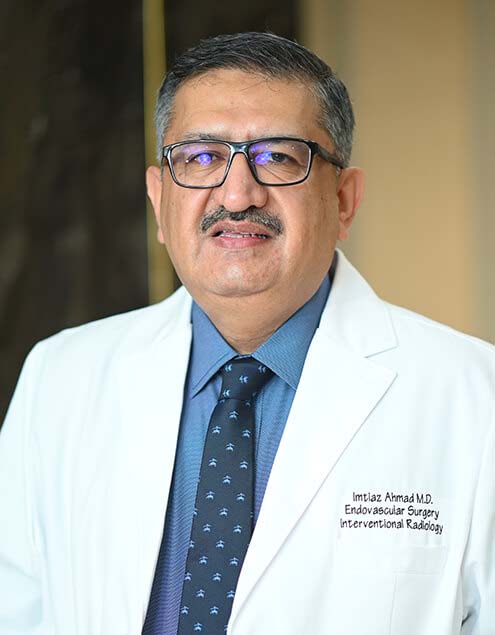
Plantar Fasciitis Embolization requires accurate vessel identification and precise catheter technique. Prof. Dr. Imtiaz Ahmad brings internationally trained interventional radiology expertise to patients in Lahore and Karachi.
Director of Interventional Pain & Spine (USA)
Served as Director of Interventional Pain and Spine Interventions at USA Vein Clinics, Fibroid, Vascular & Oncology Centers.
Northwestern Fellowship
Fellowship trained at Northwestern University, Chicago, in 1995, with over two decades of interventional and endovascular practice.
Image Guided Precision
All procedures performed under real time imaging at Farooq Hospital, Lahore and OMI Hospital, Karachi.
Diagnosis First Approach
Treatment is only recommended after abnormal vessels are confirmed on imaging, ensuring PFE is applied to the right patients.
Patient Stories
What Patients Say
Men who were hesitant about surgery have found a more comfortable path to relief through PAE.
”All staff members are very cooperative and supportive. We are highly satisfied with Dr. Imtiaz’s kind, professional, and caring behavior, which made the entire experience comfortable and reassuring.
Abdul Rauf, 64Lahore, Pakistan
”It was an excellent experience with Dr. Imtiaz and his compassionate team. Their professionalism, kindness, and skilled care gave me confidence and comfort. I am deeply grateful for the treatment received and the supportive behavior of all the doctors and staff.
Saleem Khan, 58Dubai, UAE
”Ma Sha Allah, my experience was wonderful. Dr. Imtiaz and his team were excellent, and the hospital facilities, food, and rooms were very good. Doctors and nurses checked on me regularly with care and attention. I am fully satisfied, Alhamdulillah.
Muhammad Farooq, 61Karachi, Pakistan
Desclaimer: The testimonials featured on this page reflect the genuine experiences of patients personally treated by Prof. Dr. Imtiaz Ahmad. Each story is shared with the patient’s informed consent and has not been edited to misrepresent their outcome.
FAQ
Common Questions About Plantar Fasciitis Embolization
Have more questions about heel pain treatment? Get in touch for a free consultation before deciding on treatment.
Speak directly with Dr. Imtiaz’s team
0331 111 0397
Available Mon–Sat, 9am–6pm
What is Plantar Fasciitis Embolization?
Plantar Fasciitis Embolization is a minimally invasive procedure that blocks the abnormal blood vessels responsible for chronic heel pain. A catheter is guided through a small puncture to the affected area under imaging guidance, and microscopic particles are used to shut down the inflammatory blood supply without cutting or removing any tissue.
Who is a candidate for PFE?
PFE is most suitable for patients who have experienced chronic heel pain for 6 months or more and have not found lasting relief from physiotherapy, orthotics, or steroid injections. A Doppler imaging assessment is required to confirm the presence of the abnormal vessels that embolization targets.
Is PFE better than steroid injections for plantar fasciitis?
Steroid injections can provide quick, short term relief but may weaken the plantar fascia over time if repeated, increasing the risk of rupture. PFE targets the inflammatory blood supply instead, offering a more durable solution without affecting the structural integrity of the ligament.
What is the recovery like after Plantar Fasciitis Embolization?
Recovery is quick. Most patients are discharged the same day and begin walking immediately without crutches or immobilisation. A meaningful reduction in pain is typically noticed within 1 to 2 weeks, with continued improvement over the following month.
Does PFE work for heel pain caused by flat feet?
Yes. Flat feet place constant extra tension on the plantar fascia, making chronic inflammation more likely. PFE can address the inflammatory component of the condition effectively. In such cases, it is often combined with custom orthotics to manage the underlying structural cause alongside the embolization.
Also Available
Related Services
Free First Consultation
Considering Treatment Without Surgery?
Book a free consultation with Prof. Dr. Imtiaz Ahmad, a US board-certified specialist in Pakistan, available in Lahore, Karachi, and online from anywhere in the world. We are happy to help you understand your options clearly and without pressure.
Lahore
Farooq Hospital, DHA, 0331 111 0397
Worldwide
info@drimtiazahmad.com
Karachi
OMI Hospital, MA Jinnah Rd, 0331 111 0397