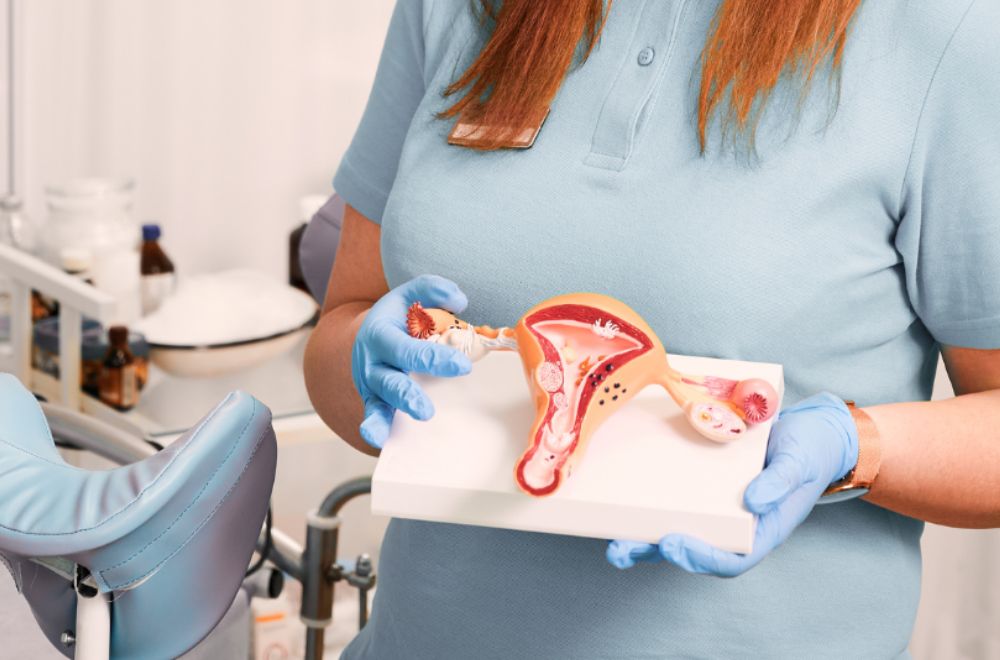
Uterine fibroids affect millions of women, yet many continue to live with heavy periods, pelvic pain, and pressure because they believe surgery is their only option. Today, that is no longer the case. For women seeking an alternative to surgery, 3D precision-guided Uterine Fibroid Embolization (UFE) has become a well-established treatment that preserves the uterus without surgical cuts or general anaesthesia.
The uterine fibroid embolization success rate has been widely studied over the past two decades. Research consistently shows that most women experience significant improvement in their symptoms, with long-term relief and faster recovery than traditional surgery. Understanding what these success rates mean can help you make an informed treatment decision.
What Does Research Say About the UFE Success Rate?
Studies over the past two decades have consistently shown a high UFE success rate for women with symptomatic fibroids. Most published studies report that 85% to 90% of patients experience significant improvement in heavy menstrual bleeding, pelvic pain, and pressure symptoms after a single procedure. Fibroids also continue to shrink over the following months, with an average volume reduction of 40% to 60%, leading to further symptom relief.
Long-term follow-up studies have also shown that symptom relief is sustained for many years after treatment, with high overall satisfaction following UFE.
Every patient undergoes a detailed clinical assessment and imaging review to determine whether 3D precision-guided UFE is the most suitable option. Using real-time image guidance and FDA-approved embolization particles, the treatment is planned to accurately target the blood vessels supplying the fibroids while preserving healthy uterine tissue. This approach helps achieve excellent clinical outcomes while maintaining patient safety and comfort.
What Affects Your Uterine Fibroid Embolization Results?
The uterine fibroid embolization success rate is not defined by fibroid size alone. Treatment effectiveness depends on factors such as the number of fibroids, their location, and their contribution to the patient’s symptoms.
Another important factor is addressing the underlying cause rather than only controlling symptoms. Medications may provide temporary relief, but they do not shrink fibroids or change the blood supply that allows them to grow. This is why many women eventually require a treatment option that provides lasting relief.
With 3D precision-guided UFE, multiple fibroids can be treated during the same procedure, making it effective for women with complex fibroid patterns while avoiding repeated interventions.
Fibroid Embolization Recovery: What Can You Expect?
Recovery after UFE is significantly shorter compared with traditional surgical procedures. Most patients can go home within a few hours or after overnight observation, depending on their condition. Unlike major surgery, there is no prolonged hospital stay, allowing women to return to daily activities sooner.
Pain management is an important part of the UFE approach. With local anaesthesia and advanced pain control techniques, the procedure is well tolerated, and many patients remain comfortable throughout treatment. The small access point is minimal and often barely noticeable after healing.
After discharge, patients remain under follow-up care to monitor recovery and progress. Some women may experience temporary cramping or discomfort, but these symptoms usually improve with medication. As fibroids gradually shrink over the following months, patients continue to improve while returning to their normal lifestyle.
Why Is UFE Considered a Minimally Invasive Fibroid Treatment?
The key difference between UFE and surgical procedures such as myomectomy lies in how fibroids are treated. Myomectomy requires an incision to remove fibroids from the uterus, whereas UFE uses an endovascular approach without opening the abdomen or removing uterine tissue.
During 3D precision-guided UFE, a thin catheter is inserted through a small access point in the groin or wrist and guided to the uterine arteries using real-time imaging. Advanced 3D guidance identifies the vessels involved, allowing precise treatment while avoiding unnecessary surgical intervention.
At Dr. Imtiaz Ahmad’s practice, specialised pain control techniques, including intra-arterial medication and superior hypogastric nerve block, help minimise discomfort during recovery. A vascular closure device allows patients to walk within hours without stitches or visible scars.
By avoiding large incisions, general anaesthesia, and direct removal of fibroid tissue, UFE provides a less invasive approach for fibroid treatment.
Choosing the Right Fibroid Treatment Approach
The right fibroid treatment is not only about reducing symptoms; it is about choosing an approach that fits a woman’s long-term health goals. Factors such as preserving the uterus, avoiding unnecessary surgery, maintaining future fertility options, and achieving lasting improvement play an important role in this decision.
Traditional treatments may focus on removing fibroids or the uterus, but modern options allow women to consider alternatives that provide effective management without major surgical intervention. UFE has become an established option for women who want to treat fibroids while preserving reproductive potential and quality of life.
Take the Right Step With the Right Specialist
Prof. Dr. Imtiaz Ahmad is a US board-certified Interventional Radiologist and Endovascular Specialist with over 25 years of experience. His expertise includes advanced endovascular treatments, including 3D precision-guided UFE, using accurate imaging and specialised techniques to provide targeted care for patients with uterine fibroids.
With experience across the USA and Pakistan, he specialises in complex embolization procedures and minimally invasive vascular interventions. His approach combines advanced technology, careful treatment planning, and patient-centred care to achieve precise results while avoiding unnecessary intervention.
If you would like to consult Dr. Imtiaz, contact us at:
Hotline: 03311110397
wa.me/: +92 330 2963300
wa.me/: +92 331 2597322
Dr. Imtiaz Ahmad
Frequently Asked Questions
Q1: Are fibroids always dangerous?
A: No. Uterine fibroids are usually non-cancerous growths, and many women may not experience symptoms. However, when fibroids start affecting daily life or causing ongoing problems, medical evaluation is important
Q2: Can fibroids come back after treatment?
A: Fibroids develop due to multiple factors, and the likelihood of recurrence depends on the individual case and treatment approach.
Q3: How long does it take to see results after UFE?
A: Improvement after UFE is gradual. Some women notice changes in their symptoms within the first few weeks.
Q4: Can UFE treat more than one fibroid at the same time?
A: Yes. One of the advantages of UFE is that multiple fibroids can be treated during a single procedure, making it a suitable option for women with multiple fibroids.